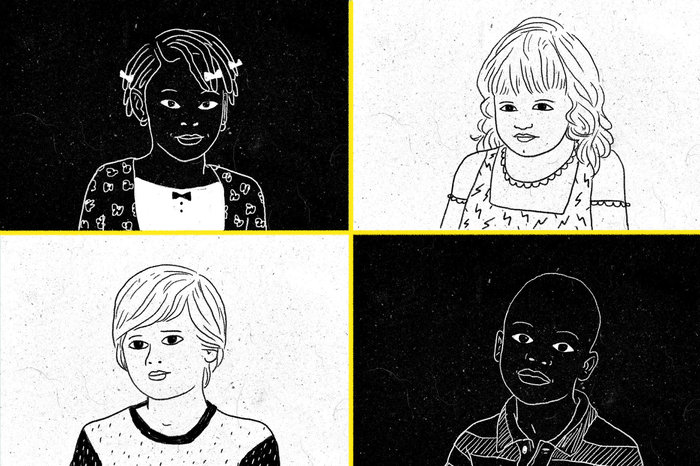
How do we get students to consider perspectives different from their own? How do we get them to challenge their own biases and prejudices? If, as Atticus Finch famously said, “You never really understand a person until you consider things from his point of view … until you climb into his skin and walk around in it,” how do we get our students to do that?
This blog is an online resource of materials gathered for Loring staff to explore. The subject is justice and equity in education. This digital library affirms Loring's commitment to equitable access to high quality and culturally relevant instruction for our students.
Showing posts with label African American Students. Show all posts
Saturday, March 25, 2017
Monday, December 12, 2016
Kwanzaa and Me - A Teacher's Story by Vivian Gussin Paley
“All these white schools I’ve been sent to are racist,” Sonya says. “I’d have done better in a black school. I was an outsider here.” These are hard words for Vivian Paley, whose own kindergarten was one of Sonya’s schools, the integrated classroom so lovingly and hopefully depicted by Paley in White Teacher. Confronted with the grown-up Sonya, now on her way to a black college, and with a chorus of voices questioning the fairness and effectiveness of integrated education, Paley sets out to discover the truth about the multicultural classroom from those who participate in it. This is an odyssey undertaken on the wings of conversation and storytelling in which every voice adds new meaning to the idea of belonging, really belonging, to a school culture. Here are black teachers and minority parents, immigrant families, a Native American educator, and the children themselves, whose stories mingle with the author’s to create a candid picture of the successes and failures of the integrated classroom. As Paley travels the country listening to these stories, we see what lies behind recent moves toward self-segregation: an ongoing frustration with racism as well as an abiding need for a nurturing community. And yet, among these diverse voices, we hear again and again the shared dream of a classroom where no family heritage is obscured and every child’s story enriches the life of the schoolhouse.
“It’s all about dialogue, isn’t it?” asks Lorraine, a black third-grade teacher whose story becomes a central motif. And indeed, it is the dialogue that prevails in this warmly provocative and deeply engaging book, as parents and teachers learn how they must talk to each other, and to their children, if every child is to secure a sense of self in the schoolroom, no matter what the predominant ethnic background. Vivian Paley offers these discoveries to readers as a starting point for their own journeys toward community and kinship in today’s schools and tomorrow’s culture.
Read an article from the New York Times here:
Friday, September 30, 2016
Bias Isn't Just A Police Problem, It's A Preschool Problem
"...It's impossible to separate these findings from today's broader, cultural context — of disproportionately high suspension rates for black boys and young men throughout the school years, of America's school-to-prison pipeline, and, most immediately, of the drumbeat of stories about black men being killed by police.
If implicit bias can play a role on our preschool reading rugs and in our classrooms' cozy corners, it no doubt haunts every corner of our society..."
Friday, September 16, 2016
Learning While Black: Creating Educational Excellence for African American Children by Janice E. Hale
Learning While Black
Creating Educational Excellence for African American Children
Janice E. Hale
with a foreword by V.P. Franklin
In Learning While Black Janice Hale argues that educators must look beyond the cliches of urban poverty and teacher training to explain the failures of public education with regard to black students. Why, Hale asks simply, are black students not being educated as well as white students?
Hale goes beyond finger pointing to search for solutions. Closing the achievement gap of African American children, she writes, does not involve better teacher training or more parental involvement. The solution lies in the classroom, in the nature of the interaction between the teacher and the child. And the key, she argues, is the instructional vision and leadership provided by principals. To meet the needs of diverse learners, the school must become the heart and soul of a broad effort, the coordinator of tutoring and support services provided by churches, service clubs, fraternal organizations, parents, and concerned citizens. Calling for the creation of the "beloved community" envisioned by Dr. Martin Luther King, Jr., Hale outlines strategies for redefining the school as the Family, and the broader community as the Village, in which each child is too precious to be left behind.
"In this book, I am calling for the school to improve traditional instructional practices and create culturally salient instruction that connects African American children to academic achievement. The instruction should be so delightful that the children love coming to school and find learning to be fun and exciting."—Janice Hale
Janice E. Hale is professor of early childhood education at Wayne State University in Detroit, Michigan. She is the founder of Visions for Children, a demonstration school designed to facilitate the intellectual development of African American preschool children. Her two previous books, Black Children: Their Roots, Culture, and Learning Styles and Unbank the Fire: Visions for the Education of African American Children, are also available from Johns Hopkins.
Sunday, August 28, 2016
Kwame Alexander on Children’s Books and the Color of Characters
"...The mind of an adult begins in the imagination of a child.
If we don’t give children books that are literary mirrors as well as windows to the whole world of possibility, if these books don’t give them the opportunity to see outside themselves, then how can we expect them to grow into adults who connect in meaningful ways to a global community, to people who might look or live differently than they. You cannot.
Am I saying that poetry and literature are the answer to Baton Rouge and Dallas and Orlando and Charleston? No. But their capacity to entertain, enlighten and empower — all at the same time — is an answer, and without them, we most certainly obstruct our children’s vision..."
Saturday, August 27, 2016
What is Discriminology?
Discriminology is the scientific study of the nature, extent, causes, consequences, and prevention of modern day racism and discriminatory behavior, both on the individual and Institutional levels. Discriminology is an interdisciplinary field drawing especially upon the research of sociologists, psychologists, psychiatrists, social anthropologists, as well as scholars of law.
Discriminology Home Page
Discriminolgy was founded in 2015 to document and publicize the mass racial inequalities that still exist in our education system. Through the use of descriptive statistics, public data portals & innovative social media work, we are empowering communities of color by making school data more transparent.
Wednesday, August 17, 2016
White People Need to Stop Snickering at Black Names by Steven M. Singer
"...Make no mistake. This is racist behavior. We are emphasizing the otherness of an entire group of people to put ourselves over and above them.
It’s bigoted, discriminatory, prejudicial and just plain dumb.
What’s wrong with black names anyway? What about them is so unacceptable?
We act as if only European and Anglicized names are reasonable. But I don’t have to go far down my rosters to find white kids with names like Braelyn, Declyn, Jaydon, Jaxon, Gunner or Hunter. I’ve never heard white folks yucking it up over those names..."
Read the entire essay here:
Labels:
African American Students,
blog post,
Culture Conflict,
Race Identity,
Racism,
White Privilege
Monday, August 15, 2016
Want To Address Teachers' Biases? First, Talk About Race
"We are going to experience discomfort — well, we may or may not experience it — but if we have it that's OK," says Coles, a third-grade teacher at Eagle Creek Elementary School in Indianapolis.
Coles is black, one of just four teachers of color among Eagle Creek Elementary's 37 staff. Throughout last year she gathered co-workers in her classroom for after-school discussions about race.
Her goal? Create a common understanding of race and power, with hopes that teachers acknowledge, then address, how that plays out in the school.
Read the rest of the article from Indiana Public Broadcasting Stations here:
Saturday, July 23, 2016
Books as Mirrors
"... the curriculum is a structure that ideally provides “windows out into the experiences of others, as well as mirrors of the student’s own reality.” In other words, schools should be spaces where kids explore the unfamiliar, but also see their own lived experiences validated and valued. For students whose racial, cultural, linguistic, or economic backgrounds differ significantly from that of the mainstream, the “mirrors” part of the metaphor can be particularly powerful..." Gregory Michie
Publishing Statistics on Children's Books about People of Color and First/Native Nations and by People of Color and First/Native Nations Authors and Illustrators
CCBC's Choices 2016 List
CCBC Choices is the annual best-of-the-year list of the Cooperative Children’s Book Center. This is a listing of titles that have been chosen for CCBC Choices 2016. The final CCBC Choices 2016 publication will include additional books (one or two might be removed) and include annotations and recommended ages for all of the books selected for final inclusion, as well as an author/title/subject index, and a commentary on the publishing year. The CCBC Choices 2016 booklet will be available at the CCBC after March 5, 2016.
Cooperative Children's Book Center
CCBC's history statement:
In 1985 the Cooperative Children's Book Center began to document the numbers of books we received each year that were written and/or illustrated by African Americans. Then CCBC Director Ginny Moore Kruse was serving as a member of the Coretta Scott King Award Committee that year, and we were appalled to learn that, of the approximately 2,500 trade books that were published in 1985, only 18 were created by African Americans, and thus eligible for the Coretta Scott King Award.
As a statewide book examination center serving Wisconsin, the CCBC receives the majority of new U.S. trade books published for children and teens each year. In the early years of gathering these statistics, we used the CCBC's collections and worked in conjunction with the Coretta Scott King Award Task Force of the American Library Association, to document the number of books by and about African Americans published annually.
Starting in 1994 we began also keeping track of the numbers of books by Asian/Pacific and Asian/Pacific American, First/Native Nation and Latino book creators as well. We also began documenting not only the number of books created by people of color and First/Native Nations authors and illustrators, but the number of books about people of color and First/Native Nations, including the many titles that have been created by white authors and/or illustrators.
Saturday, May 7, 2016
No Excuses: Closing the Racial Gap in Learning by Abigail Thernstrom and Stephan Thernstrom
No Excuses: Closing the Racial Gap in Learning
by Abigail Thernstrom and Stephan Thernstrom
352 pages, Simon & Schuster, 2004
A wide and tragic gap in learning is evident in affluent suburbs as well as inner cities. But great schools are scattered across the country, as described in inspiring detail by the Thernstroms. These schools are putting even the most highly disadvantaged children on the American ladder of economic opportunity.
There are no good excuses for the perpetuation of long-standing inequalities, the Thernstroms argue eloquently. The problem can be solved, but conventional strategies will not work. Fundamental educational reform is needed. Carefully researched, accessibly written, and powerfully persuasive, this book offers both a close analysis of the current landscape and a blueprint for essential and overdue change.
Look inside.
Must Schools Fail? A review from the New York Review of Books here.
Comments and Reviews here.
Labels:
Academic Achievement,
African American Students,
Book,
Culture Conflict,
Educational Equalization
Saturday, April 30, 2016
Culturally Relevant Teaching: Hip-Hop Pedagogy in Urban Schools by Darius D. Prier
Culturally Relevant Teaching centers hip-hop culture as a culturally relevant form of critical pedagogy in urban pre-service teacher education programs. In this important book, Darius D. Prier explores how hip-hop artists construct a sense of democratic education and pedagogy with transformative possibilities in their schools and communities. In a postmodern context, students’ critical street narratives challenge educators to rethink where «public education» can happen, and the political and empowering purposes to which Black popular culture can serve social justice ends for youth in urban education. This book provides educational leaders in the academy and public schools with new cultural contexts that connect teaching and learning with music and popular culture in relation to race, class, gender, culture, and community.
Thursday, March 31, 2016
Promoting Racial Literacy in Schools: Differences That Make a Difference by Howard C. Stevenson
Promoting Racial Literacy in Schools: Differences That Make a Difference
by Howard C. Stevenson
240 pages Publisher: Teachers College Press (December 20, 2013)
Based on extensive research, this provocative volume explores how schools are places where racial conflicts often remain hidden at the expense of a healthy school climate and the well-being of students of color. Most schools fail to act on racial micro-aggressions because the stress of negotiating such conflicts is extremely high due to fears of incompetence, public exposure, and accusation. Instead of facing these conflicts head on, schools perpetuate a set of avoidance or coping strategies. The author of this much-needed book uncovers how racial stress undermines student achievement. Students, educators, and social service support staff will find workable strategies to improve their racial literacy skills to read, recast, and resolve racially stressful encounters when they happen.
Book Features:
* A model that applies culturally relevant behavioral stress management strategies to problem-solve racial stress in schools.
* Examples demonstrating workable solutions relevant within predominantly White schools for students, parents, teachers, and administrators.
* Measurable outcomes and strategies for developing racial literacy skills that can be integrated into the K-12 curriculum and teacher professional development.
Teaching and leadership skills that will create a more tolerant and supportive school environment for all students.
See inside here.
Labels:
Academic Achievement,
Administration,
African American Students,
Book,
Critical Pedagogy,
Culture Conflict,
Educational Equalization,
Multicultural Education,
Race,
Racism,
Social Reform
Wednesday, March 30, 2016
For White Folks Who Teach in the Hood... and the Rest of Y'all Too: Reality Pedagogy and Urban Education by Christopher Emdin
For White Folks Who Teach in the Hood... and the Rest of Y'all Too:
Reality Pedagogy and Urban Education 232 pages,Beacon Press March 22, 2016
Merging real stories with theory, research, and practice, a prominent scholar offers a new approach to teaching and learning for every stakeholder in urban education.
Drawing on his own experience of feeling undervalued and invisible in classrooms as a young man of color and merging his experiences with more than a decade of teaching and researching in urban America, award-winning educator Christopher Emdin offers a new lens on an approach to teaching and learning in urban schools. He begins by taking to task the perception of urban youth of color as unteachable, and he challenges educators to embrace and respect each student’s culture and to reimagine the classroom as a site where roles are reversed and students become the experts in their own learning.
Putting forth his theory of Reality Pedagogy, Emdin provides practical tools to unleash the brilliance and eagerness of youth and educators alike—both of whom have been typecast and stymied by outdated modes of thinking about urban education. With this fresh and engaging new pedagogical vision, Emdin demonstrates the importance of creating a family structure and building communities within the classroom, using culturally relevant strategies like hip-hop music and call-and-response, and connecting the experiences of urban youth to indigenous populations globally. Merging real stories with theory, research, and practice, Emdin demonstrates how by implementing the “Seven C’s” of reality pedagogy in their own classrooms, urban youth of color benefit from truly transformative education.
Lively, accessible, and revelatory, For White Folks Who Teach in the Hood...and the Rest of Y’all Too is the much-needed antidote to traditional top-down pedagogy and promises to radically reframe the landscape of urban education for the better.
Read an interview with the author here:
What ‘white folks who teach in the hood’ get wrong about education
Look inside here.
Labels:
Academic Achievement,
African American Students,
Book,
Critical Pedagogy,
Race,
Racism,
Teaching Methods & Materials
Monday, March 28, 2016
200+ Education Strategies to Teach Children of Color by Jawanza Kunjufu
200+ Education
Strategies to Teach Children of Color
200 pages, Publisher: African American Images
(November 1, 2009) $14.95
With an
emphasis on pragmatic approaches that can be accomplished in the classroom,
this almanac of teaching solutions provides inner-city educators with 100
all-new strategies to daily challenges. As turnover rates remain
excessively high among teachers in urban schools—83 percent of whom are
white females who were ill-prepared by their college programs—the type of
firsthand experience offered by this helpful manual continues to be an
essential source of training. The advice and expertise presented is fully
supported by real-life examples rather than intangible theory, and the details
directly tackle issues of race and class while offering a legitimate criticism
of the American school system that poses many of the problems that teachers
face.
Look inside here.
“You don’t teach the way you want to teach, you teach
the way your children learn. You must adjust your pedagogy.”
- Jawanza Kunjufu
There is Nothing Wrong with Black Students by Jawanza Kunjufu
There is Nothing Wrong with Black
Students 128 pages, $12.95
Publisher: African American Images
(February 24, 2012)
Refuting
common ideas about the racial achievement gap, this exploration of the
education system posits that the gap is not the result of the students, their
parents, or the larger community, but rather stems from the limited
effectiveness of the schools they attend. With a focus on what principals and
teachers can do, this instructive resource explores ways that schools can
change in order to better serve the needs of these students, such as gaining a
better understanding of different learning styles, implementing a curriculum
that is more relevant to students’ lives, focusing on the amount of time each
task takes each student, and experimenting with single-gender classrooms. This
book also looks at examples of the success of black students in schools that
have taken the time to apply some of these policies, demonstrating that any
student can thrive when benefited with a passionate and comprehensive
education.
Read pages here.
Read pages here.
Sunday, March 27, 2016
Young, Gifted, and Black: Promoting High Achievement among African-American Students by Claude Steele, Theresa Perry and Asa Hilliard
Young, Gifted, and Black: Promoting High
Achievement among African-American Students
192 pages Publisher: Beacon Press (February 2, 2004) $16.00
Young,
Gifted, and Black is a unique
joint effort by three leading African-American scholars to radically reframe
the debates swirling around the achievement of African-American students in
school.
In three separate but allied essays, Theresa Perry, Claude Steele, and Asa Hilliard place students' social identity as African-Americans at the very center of the discussion. They all argue that the unique social and cultural position Black students occupy, in a society which often devalues and stereotypes African American identity, fundamentally shapes students' experience of school and sets up unique obstacles. And they all argue that a proper understanding of the forces at work can lead to practical, powerful methods for promoting high achievement at all levels.
Theresa Perry argues that African-American students face dilemmas, founded in the experience of race and ethnicity in America, that make the task of achievement distinctive and difficult. (For instance: "How do I commit myself to achieve, to work hard over time in school, if I cannot predict when or under what circumstances this hard work will be acknowledged and recognized?") She uncovers a rich and powerful African- American philosophy of education, historically forged against such obstacles and capable of addressing them, by reading African-American narratives from Frederick Douglass to Maya Angelou. She carefully critiques the most popular theoretical explanations for group differences in achievement. And she lays out how educators today-in a post-civil rights era-can draw on theory and on the historical power of the African-American philosophy and tradition of education to reorganize the school experience of African-American students.
Claude Steele reports stunningly clear empirical psychological evidence that when Black students believe they are being judged as members of a stereotyped group rather than as individuals, they do worse on tests. He finds the mechanism, which he calls "stereotype threat," to be a quite general one, affecting women's performance in mathematics, for instance, where stereotypes about gender operate. He analyzes the subtle psychology of stereotype threat and reflects on the broad implications of his research for education, suggesting techniques-based again on evidence from controlled psychological experiments - that teachers and mentors and schools can use to counter stereotype threat's powerful effect.
Asa Hilliard's ends essay, against a variety of false theories and misguided views of African American achievement, and focuses on actual schools and programs and teachers around the country that allow African-American students achieve at high levels, describing what they are like and what makes them work.
Young, Gifted, and Black will change the way we think and talk about African American student achievement and will be necessary reading on this topic for years to come.
The Trouble With Black Boys: ...And Other Reflections on Race, Equity, and the Future of Public Education by Pedro Noguera
The Trouble With Black Boys: ...And
Other Reflections on Race, Equity,
and the Future of Public Education
368 pages Publisher: Jossey-Bass;
1 edition (June 9, 2009) $19.95
For many years to come, race will continue to be a source of
controversy and conflict in American society. For many of us it will continue
to shape where we live, pray, go to school, and socialize. We cannot simply
wish away the existence of race or racism, but we can take steps to lessen the
ways in which the categories trap and confine us. Educators, who should be
committed to helping young people realize their intellectual potential as they
make their way toward adulthood, have a responsibility to help them find ways
to expand identities related to race so that they can experience the fullest
possibility of all that they may become. In this brutally honest-yet ultimately
hopeful- book Pedro Noguera examines the many facets of race in schools and
society and reveals what it will take to improve outcomes for all students.
From achievement gaps to immigration, Noguera offers a rich and compelling
picture of a complex issue that affects all of us.
The Role and Influence of Environmental and Cultural Factors on the Academic Performance of African American Males
2016 Educational Equity in Action June 20-21, 2016 at University of Minnesota
Labels:
Academic Achievement,
African American Students,
Book,
Discrimination in Education,
Race,
Racism
Saturday, March 26, 2016
Dreamkeepers: Successful Teachers of African American Children by Gloria Ladson-Billings
Dreamkeepers:
Successful Teachers of African American Children
256 pages. Publisher: Jossey-Bass; 2nd edition (March
23, 2009) $21.95
In the second
edition of her critically acclaimed book The Dreamkeepers, Gloria
Ladson-Billings revisits the eight teachers who were profiled in the first
edition and introduces us to new teachers who are current exemplars of good
teaching. She shows that culturally relevant teaching is not a matter of race,
gender, or teaching style. What matters most is a teacher's efforts to work
with the unique strengths a child brings to the classroom. A brilliant mixture
of scholarship and storytelling, The Dreamkeepers challenges us to envision
intellectually rigorous and culturally relevant classrooms that have the power
to improve the lives of not just African American students, but all children.
This new edition also includes questions for reflection.
See Preview pages here.
But That's Just Good Teaching! The Case for Culturally Relevant Pedagogy by Gloria Ladson-Billings
See Preview pages here.
But That's Just Good Teaching! The Case for Culturally Relevant Pedagogy by Gloria Ladson-Billings
A Handbook for Teachers of African American Children by Baruti Kafele
A Handbook for Teachers of African American Children is a guide providing strategies and suggestions for teachers to utilize towards raising the achievement levels of African American children. Principal Kafele states emphatically that no teacher of African American children can afford not to read this book. He says that as long as classroom teachers fail to make connections with their African American students, learning will certainly fail to occur. A Handbook For Teachers of African American Children shows teachers how to make connections with their African American students through the information contained in the following chapters:
Chapter 1 – The Missing Component: African-centered Instruction
The relationship between African American history, African-centered instruction, developing a purpose for learning, self-esteem and achievement.
Chapter 2 – A Mindset for Teaching
Developing a clearly defined purpose for teaching, being mission-driven, having a vision, being goal-oriented and recognizing your role model status.
Chapter 3 – Motivating Your Students
Strategies for keeping students motivated throughout the school year.
Chapter 4 – Effective Classroom Instruction
Towards raising student achievement levels, the teacher must be cognizant of how students learn while knowing which instructional models best address their learning styles.
Chapter 5 – Planning and Organization
Strategies for purposeful planning and helping teachers to remain organized throughout the school year.
Chapter 6 – Managing Your Classroom
The relationship between classroom management and learning. Strategies are offered for creating a classroom environment that is conducive to learning, while engaging in effective classroom management practices.
Chapter 7 – Making Connections
Building positive, productive relationships between teachers and students. If meaningful connections are not being made between the teacher and students, the probability for learning diminishes significantly.
Chapter 8 – Holding Yourself Accountable
Strategies for teachers to look within themselves as a result of both student failure and success.
Chapter 9 – Professional Development
A discussion of the importance of ongoing professional development for teachers. Teachers must be life-long learners while striving to develop and maintain meaningful collegial relationships with peers.
Chapter 10 – A Note on Parental Engagement
Developing relationships with parents that are meaningful and productive towards student success.
Motivating Black Males to Achieve in School & in Life by Baruti Kafele
Motivating Black Males to Achieve in School & in Life
One of the most vexing problems confronting educators today is the chronic achievement gap between black male students and their peers. In this inspiring and thought-provoking book, veteran educator Baruti K. Kafele offers a blueprint for lifting black males up and ensuring their success in the classroom and beyond.
Motivating Black Males to Achieve in School and in Life offers proven strategies for getting black male students in middle school and high school to value learning, improve their grades, and maintain high standards for themselves. The author shows how simple but powerful measures to instill self-worth in young black males can not only raise these students' achievement, but also profoundly alter their lives for the better. This book will help you to help students
• Reverse the destructive effects of negative influences, whether among peers or in the popular culture;
• Surmount adverse conditions at home or in their communities;
• Participate in mentorship programs with successful black male adults; and
• Take pride in their heritage by learning about great figures and achievements in black history.
• Surmount adverse conditions at home or in their communities;
• Participate in mentorship programs with successful black male adults; and
• Take pride in their heritage by learning about great figures and achievements in black history.
Whether your school is urban or rural, all-black or mixed, you'll find this book to be an insightful resource that addresses the root causes of low achievement among young black males and offers a clear path to overcoming them.
Subscribe to:
Posts (Atom)