Showing posts with label Social Conditions. Show all posts

Friday, September 30, 2016

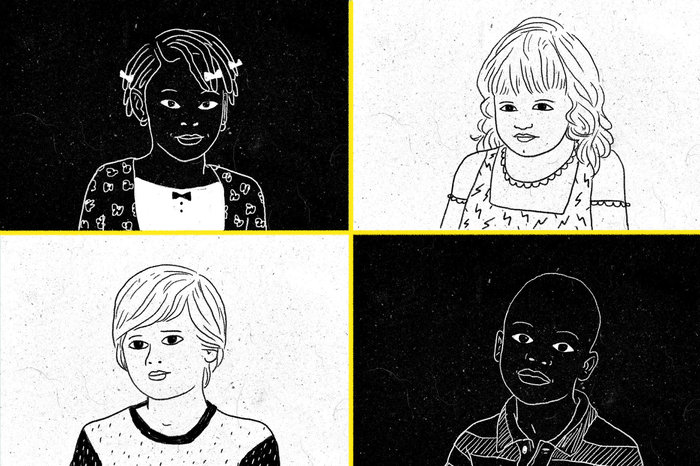
Bias Isn't Just A Police Problem, It's A Preschool Problem


"...It's impossible to separate these findings from today's broader, cultural context — of disproportionately high suspension rates for black boys and young men throughout the school years, of America's school-to-prison pipeline, and, most immediately, of the drumbeat of stories about black men being killed by police.
If implicit bias can play a role on our preschool reading rugs and in our classrooms' cozy corners, it no doubt haunts every corner of our society..."

Sunday, April 10, 2016

When Whites Just Don't Get It OP-ED Series by Nicholas Kristof, New York Times


Is Everyone a Little Bit Racist?

When Whites Just Don't Get It, Part 2

When Whites Just Don't Get It, Part 3

When Whites Just Don't Get It, Part 4

When Whites Just Don't Get It, Part 5

When Whites Just Don’t Get It, Part 6 

"...So if we’re going to address systemic disadvantage of black children, we have to broaden the conversation to unequal education. There’s a lot of loose talk among whites about black boys making bad decisions, but we fail these kids before they fail us. That’s unconscionable when increasingly we have robust evidence about the kinds of initiatives (like home visitation, prekindergarten and “career academies”) that reduce disparities...

Thursday, March 31, 2016

White Privilege


White Privilege: Unpacking the Invisible Knapsack by Peggy McIntosh

Teaching Tolerance: On Racism and White Privilege

Tim Wise on Racism

White Fragility by Robin DiAngelo (Download and Read)

4 Ways to Push Back Against Your Privilege by Mia McKenzie

White Debt - Reckoning with what is owed — and what can never be repaid — for racial privilege. By EULA BISS

Some Aspects and Assumptions of White Culture in the United States by Judith H. Katz

Bridging Literacy and Equity: The Essential Guide to Social Equity Teaching by Althier M. Lazar, Patricia A. Edwards, Gwendolyn Thompson McMillon


Bridging Literacy and Equity: The Essential Guide to Social Equity Teaching
 by Althier M. Lazar, Patricia A. Edwards, Gwendolyn Thompson McMillon
  • 160 pages Publisher: Teachers College Press (June 29, 2012)

     Bridging Literacy and Equity synthesizes the essential research and practice of social equity literacy teaching in on succinct, user-friendly. Chapters identify six key dimensions of social equity teaching that can help teachers see their students’ potential and create conditions that will support their literacy development. Serving students well depends on understanding relationships between race, class, culture, and literacy; the complexity and significance of culture; and the culturally situated nature of literacy. It also requires knowledge of culturally responsive practices, such as collaborating with and learning from caregivers, using cultural referents, enacting critical and transformative literacy practices, and seeing the capacities of English Language Learners and children who speak African American Language.
     Each chapter includes a “Reflection and Inquiry” section with exercises to help readers relate chapter concepts and issues to their own teaching practices.

Monday, March 28, 2016

Race, Whiteness, and Education by Zues Leonardo


Race, Whiteness, and Education 
232 pages Publisher: Routledge; 1st edition (March 25, 2009) $48.95

In the colorblind era of Post-Civil Rights America, race is often wrongly thought to be irrelevant or, at best, a problem of racist individuals rather than a systemic condition to be confronted.  Race, Whiteness, and Education interrupts this dangerous assumption by reaffirming a critical appreciation of the central role that race and racism still play in schools and society.  Author Zeus Leonardo’s conceptual engagement of race and whiteness asks questions about its origins, its maintenance, and envisages its future. This book does not simply rehearse exhausted ideas on the relationship among race, class, and education, but instead offers new ways of understanding how multiple social relations interact with one another and of their impact in thinking about a more genuine sense of multiculturalism. By asking fundamental questions about whiteness in schools and society, Race, Whiteness, and Education goes to the heart of race relations and the common sense understandings that sustain it, thus painting a clearer picture of the changing face of racism.  

Whatever It Takes: Geoffrey Canada's Quest to Change Harlem and America by Paul Tough


            Whatever It Takes: Geoffrey Canada's Quest to Change Harlem and America 
310 pages Publisher: Mariner Books; Reprint edition (September 10, 2009) $14.95

What would it take to change the lives of poor children—not one by one, through heroic interventions and occasional miracles, but in big numbers, and in a way that could be replicated nationwide? The question led him to create the Harlem Children’s Zone, a ninety-seven-block laboratory in central Harlem where he is testing new and sometimes controversial ideas about poverty in America. His conclusion: if you want poor kids to be able to compete with their middle-class peers, you need to change everything in their lives—their schools, their neighborhoods, even the child-rearing practices of their parents.
Whatever It Takes is a tour de force of reporting, an inspired portrait not only of Geoffrey Canada but of the parents and children in Harlem who are struggling to better their lives, often against great odds. Carefully researched and deeply affecting, this is a dispatch from inside the most daring and potentially transformative social experiment of our time.


Why Are All the Black Kids Sitting Together in the Cafeteria: And Other Conversations About Race by Beverly Daniel Tatum


 Why Are All the Black Kids Sitting Together in the Cafeteria: 
And Other Conversations About Race 
294 pages Publisher: Basic Books; Revised edition (January 17, 2003) $16.95


Walk into any racially mixed high school and you will see black youth seated together in the cafeteria. Of course, it's not just the black kids sitting together-the white, Latino, Asian Pacific, and, in some regions, American Indian youth are clustered in their own groups, too. The same phenomenon can be observed in college dining halls, faculty lounges, and corporate cafeterias. What is going on here? Is this self-segregation a problem we should try to fix, or a coping strategy we should support? How can we get past our reluctance to talk about racial issues to even discuss it? And what about all the other questions we and our children have about race? Beverly Daniel Tatum, a renowned authority on the psychology of racism, asserts that we do not know how to talk about our racial differences: Whites are afraid of using the wrong words and being perceived as "racist" while parents of color are afraid of exposing their children to painful racial realities too soon. Using real-life examples and the latest research, Tatum presents strong evidence that straight talk about our racial identities-whatever they may be-is essential if we are serious about facilitating communication across racial and ethnic divides. We have waited far too long to begin our conversations about race. This remarkable book, infused with great wisdom and humanity, has already helped hundreds of thousands of readers figure out where to start.


Sunday, March 27, 2016

Whistling Vivaldi: How Stereotypes Affect Us and What We Can Do by Claude Steele


               Whistling Vivaldi: How Stereotypes Affect Us and What We Can Do   
256 pages, Publisher: W. W. Norton & Company; 
Reprint edition (April 4, 2011) $15.95

The acclaimed social psychologist offers an insider’s look at his research and groundbreaking findings on stereotypes and identity. Claude M. Steele, who has been called “one of the few great social psychologists,” offers a vivid first-person account of the research that supports his groundbreaking conclusions on stereotypes and identity. He sheds new light on American social phenomena from racial and gender gaps in test scores to the belief in the superior athletic prowess of black men, and lays out a plan for mitigating these “stereotype threats” and reshaping American identities.

Saturday, March 26, 2016

Just Mercy: A Story of Justice and Redemption by Bryan Stevenson


Just Mercy: A Story of Justice and Redemption by Bryan Stevenson

  • 368 pages Publisher: Spiegel & Grau; Reprint edition (August 18, 2015)

A powerful true story about the potential for mercy to redeem us, and a clarion call to fix our broken system of justice—from one of the most brilliant and influential lawyers of our time
Bryan Stevenson was a young lawyer when he founded the Equal Justice Initiative, a legal practice dedicated to defending those most desperate and in need: the poor, the wrongly condemned, and women and children trapped in the farthest reaches of our criminal justice system. One of his first cases was that of Walter McMillian, a young man who was sentenced to die for a notorious murder he insisted he didn’t commit. The case drew Bryan into a tangle of conspiracy, political machination, and legal brinksmanship—and transformed his understanding of mercy and justice forever.
 Just Mercy is at once an unforgettable account of an idealistic, gifted young lawyer’s coming of age, a moving window into the lives of those he has defended, and an inspiring argument for compassion in the pursuit of true justice.


Book Review from The Washington Post


Post Traumatic Slave Syndrome : America's Legacy of Enduring Injury and Healing by Joy Angela Degruy


     Post Traumatic Slave Syndrome 
     244 pages Publisher: Joy Degruy Publications Inc (2005) $19.95

While African Americans managed to emerge from chattel slavery and the oppressive decades that followed with great strength and resiliency, they did not emerge unscathed. Slavery produced centuries of physical, psychological and spiritual injury.  Post Traumatic Slave Syndrome: America's Legacy of Enduring Injury and Healing lays the groundwork for understanding how the past has influenced the present, and opens up the discussion of how we can use the strengths we have gained to heal.

More information here.