Showing posts with label Discrimination in Education. Show all posts

Friday, September 30, 2016

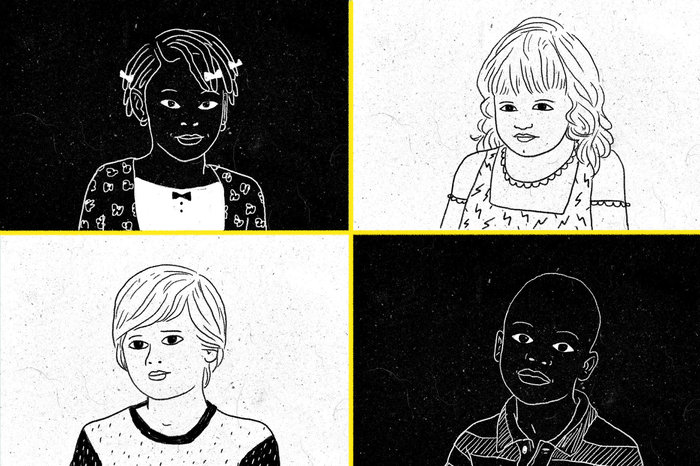
Bias Isn't Just A Police Problem, It's A Preschool Problem


"...It's impossible to separate these findings from today's broader, cultural context — of disproportionately high suspension rates for black boys and young men throughout the school years, of America's school-to-prison pipeline, and, most immediately, of the drumbeat of stories about black men being killed by police.
If implicit bias can play a role on our preschool reading rugs and in our classrooms' cozy corners, it no doubt haunts every corner of our society..."

Friday, September 16, 2016

Learning While Black: Creating Educational Excellence for African American Children by Janice E. Hale

Learning While Black
Creating Educational Excellence for African American Children

Janice E. Hale
with a foreword by V.P. Franklin

In Learning While Black Janice Hale argues that educators must look beyond the cliches of urban poverty and teacher training to explain the failures of public education with regard to black students. Why, Hale asks simply, are black students not being educated as well as white students?

Hale goes beyond finger pointing to search for solutions. Closing the achievement gap of African American children, she writes, does not involve better teacher training or more parental involvement. The solution lies in the classroom, in the nature of the interaction between the teacher and the child. And the key, she argues, is the instructional vision and leadership provided by principals. To meet the needs of diverse learners, the school must become the heart and soul of a broad effort, the coordinator of tutoring and support services provided by churches, service clubs, fraternal organizations, parents, and concerned citizens. Calling for the creation of the "beloved community" envisioned by Dr. Martin Luther King, Jr., Hale outlines strategies for redefining the school as the Family, and the broader community as the Village, in which each child is too precious to be left behind.

"In this book, I am calling for the school to improve traditional instructional practices and create culturally salient instruction that connects African American children to academic achievement. The instruction should be so delightful that the children love coming to school and find learning to be fun and exciting."—Janice Hale

Janice E. Hale is professor of early childhood education at Wayne State University in Detroit, Michigan. She is the founder of Visions for Children, a demonstration school designed to facilitate the intellectual development of African American preschool children. Her two previous books, Black Children: Their Roots, Culture, and Learning Styles and Unbank the Fire: Visions for the Education of African American Children, are also available from Johns Hopkins.

Sunday, August 21, 2016

Meet Cecilia “Cissy” Marshall


Read this article in the August 20, 2016, Washington Post:

Sixty-two years later, Cissy Marshall, now 88, remembers certain details of the day the 9-to-0 decision in Brown v. Board of Education was handed down, as if it happened yesterday.

She was in New York, working at the NAACP’s offices on 43rd Street.

Thurgood Marshall and the legal team that included James M. Nabrit and George Hayes had traveled to Washington on a tip the justices would reveal the ruling. “They were expecting the decision,” she said. “They were getting hints the opinion was coming down. You are not supposed to know anything of these things. But a grapevine gets going.”

Chief Justice Earl Warren delivered the unanimous ruling: “We conclude that, in the field of public education, the doctrine of ‘separate but equal’ has no place. Separate educational facilities are inherently unequal. Therefore, we hold that the plaintiffs and others similarly situated for whom the actions have been brought are, by reason of the segregation complained of, deprived of the equal protection of the laws guaranteed by the Fourteenth Amendment.”

Sunday, April 10, 2016

When Whites Just Don't Get It OP-ED Series by Nicholas Kristof, New York Times


Is Everyone a Little Bit Racist?

When Whites Just Don't Get It, Part 2

When Whites Just Don't Get It, Part 3

When Whites Just Don't Get It, Part 4

When Whites Just Don't Get It, Part 5

When Whites Just Don’t Get It, Part 6 

"...So if we’re going to address systemic disadvantage of black children, we have to broaden the conversation to unequal education. There’s a lot of loose talk among whites about black boys making bad decisions, but we fail these kids before they fail us. That’s unconscionable when increasingly we have robust evidence about the kinds of initiatives (like home visitation, prekindergarten and “career academies”) that reduce disparities...

Thursday, March 31, 2016

Educational Equity: Examples of School Equity Policies in the United States


Minneapolis Public Schools Policy 1304 Equity and Diversity

RACIAL EQUITY POLICY BRIEF 16 Solutions that Deliver Equity and Excellence in Education By Jermaine Toney and Hillary Rodgers

Portland Public Schools Racial Educational Policy

ENSURING EDUCATIONAL AND RACIAL EQUITY - Seattle Public Schools

Bellevue School District Equity Department

Bloomington Public Schools Office of Educational Equity

Hopkins School District - Equity Strategy Framework

Portland Public Schools Racial Equity Plan (DRAFT)

Vision and Mission for Equity and Diversity in Our School/District - Nebraska Department of Education

A Promise to Act: Educational Equity and Excellence for All of Our Children - Mille Lacs Band of Ojibwe leaders, Isle Schools, Nay Ah Shing Schools, Onamia Schools, Wewinabi Early Childhood Program, and Central Lakes College 

Dignity in Schools Campaign (DSC) - Ensuring Equity in Education

Denver Public Schools - Definitions Helpful to Understand Equity and Inclusion in Education

How Does Your Organization Define Equity? Education Funding Advisory Board - Illinois State Board of Education

Saint Paul Public Schools Policy - Racial Equity

REIMAGINING EQUITY AND DIVERSITY: A Framework for Transforming the University of Minnesota

Tuesday, March 29, 2016

Multicultural Education: Issues and Perspectives by James A. Banks and Cherry A. McGee Banks

Multicultural Education: Issues and Perspectives 

384 pages,8th Edition by James A. Banks and Cherry A. McGee Banks 2012

Multicultural Education: Issues and Perspectives is designed to help current and future educators acquire the concepts, paradigms, and explanations needed to become more effective practitioners in culturally, racially, and linguistically diverse classrooms and schools. The Eighth Edition has been revised to reflect new research and data regarding the decreasing non-Hispanic White population in the U.S. Two new sections to the Multicultural Resources include "Special Education and Equity," and "Gifted Education and Equity." The Multicultural Resources in the Appendix have also been revised and updated and the Glossary has been revised to incorporate 2010 census data and new developments in the field.
Equity Pedagogy: An Essential Component of Multicultural Education

Multiculturalism’s Five Dimensions

Center for Multicultural Education


Monday, March 28, 2016

200+ Education Strategies to Teach Children of Color by Jawanza Kunjufu


200+ Education Strategies to Teach Children of Color 
200 pages, Publisher: African American Images (November 1, 2009) $14.95 

With an emphasis on pragmatic approaches that can be accomplished in the classroom, this almanac of teaching solutions provides inner-city educators with 100 all-new strategies to daily challenges. As turnover rates remain excessively high among teachers in urban schools—83 percent of whom are white females who were ill-prepared by their college programs—the type of firsthand experience offered by this helpful manual continues to be an essential source of training. The advice and expertise presented is fully supported by real-life examples rather than intangible theory, and the details directly tackle issues of race and class while offering a legitimate criticism of the American school system that poses many of the problems that teachers face.

Look inside here.


“You don’t teach the way you want to teach, you teach 
the way your children learn. You must adjust your pedagogy.”
- Jawanza Kunjufu

There is Nothing Wrong with Black Students by Jawanza Kunjufu


There is Nothing Wrong with Black Students 128 pages, $12.95
Publisher: African American Images (February 24, 2012)


Refuting common ideas about the racial achievement gap, this exploration of the education system posits that the gap is not the result of the students, their parents, or the larger community, but rather stems from the limited effectiveness of the schools they attend. With a focus on what principals and teachers can do, this instructive resource explores ways that schools can change in order to better serve the needs of these students, such as gaining a better understanding of different learning styles, implementing a curriculum that is more relevant to students’ lives, focusing on the amount of time each task takes each student, and experimenting with single-gender classrooms. This book also looks at examples of the success of black students in schools that have taken the time to apply some of these policies, demonstrating that any student can thrive when benefited with a passionate and comprehensive education.

Read pages here.

Sunday, March 27, 2016

Young, Gifted, and Black: Promoting High Achievement among African-American Students by Claude Steele, Theresa Perry and Asa Hilliard


        Young, Gifted, and Black: Promoting High 
Achievement among African-American Students
            192 pages Publisher: Beacon Press (February 2, 2004) $16.00   


Young, Gifted, and Black is a unique joint effort by three leading African-American scholars to radically reframe the debates swirling around the achievement of African-American students in school.
In three separate but allied essays, Theresa Perry, Claude Steele, and Asa Hilliard place students' social identity as African-Americans at the very center of the discussion. They all argue that the unique social and cultural position Black students occupy, in a society which often devalues and stereotypes African American identity, fundamentally shapes students' experience of school and sets up unique obstacles. And they all argue that a proper understanding of the forces at work can lead to practical, powerful methods for promoting high achievement at all levels.
Theresa Perry argues that African-American students face dilemmas, founded in the experience of race and ethnicity in America, that make the task of achievement distinctive and difficult. (For instance: "How do I commit myself to achieve, to work hard over time in school, if I cannot predict when or under what circumstances this hard work will be acknowledged and recognized?") She uncovers a rich and powerful African- American philosophy of education, historically forged against such obstacles and capable of addressing them, by reading African-American narratives from Frederick Douglass to Maya Angelou. She carefully critiques the most popular theoretical explanations for group differences in achievement. And she lays out how educators today-in a post-civil rights era-can draw on theory and on the historical power of the African-American philosophy and tradition of education to reorganize the school experience of African-American students. 
Claude Steele reports stunningly clear empirical psychological evidence that when Black students believe they are being judged as members of a stereotyped group rather than as individuals, they do worse on tests. He finds the mechanism, which he calls "stereotype threat," to be a quite general one, affecting women's performance in mathematics, for instance, where stereotypes about gender operate. He analyzes the subtle psychology of stereotype threat and reflects on the broad implications of his research for education, suggesting techniques-based again on evidence from controlled psychological experiments - that teachers and mentors and schools can use to counter stereotype threat's powerful effect. 
Asa Hilliard's ends essay, against a variety of false theories and misguided views of African American achievement, and focuses on actual schools and programs and teachers around the country that allow African-American students achieve at high levels, describing what they are like and what makes them work. 
Young, Gifted, and Black will change the way we think and talk about African American student achievement and will be necessary reading on this topic for years to come.

          Preview here.

Everyday Antiracism: Getting Real About Race in School by Mica Pollack


           Everyday Antiracism: Getting Real About Race in School
           389 pages Publisher: The New Press (June 1, 2008) $24.95 

Which acts by educators are "racist" and which are "antiracist"? How can an educator constructively discuss complex issues of race with students and colleagues? In Everyday Antiracism, leading educators deal with the most challenging questions about race in school, offering invaluable and effective advice.
Contributors including Beverly Daniel Tatum, Sonia Nieto, and Pedro Noguera describe concrete ways to analyze classroom interactions that may or may not be "racial," deal with racial inequality and "diversity," and teach to high standards across racial lines. Topics range from using racial incidents as teachable moments and responding to the "n-word" to valuing students' home worlds, dealing daily with achievement gaps, and helping parents fight ethnic and racial misconceptions about their children. Questions following each essay prompt readers to examine and discuss everyday issues of race and opportunity in their own classrooms and schools.
For educators and parents determined to move beyond frustrations about race, Everyday Antiracism is an essential tool.

The Trouble With Black Boys: ...And Other Reflections on Race, Equity, and the Future of Public Education by Pedro Noguera


The Trouble With Black Boys: ...And Other Reflections on Race, Equity, 
and the Future of Public Education 
368 pages Publisher: Jossey-Bass; 1 edition (June 9, 2009) $19.95

For many years to come, race will continue to be a source of controversy and conflict in American society. For many of us it will continue to shape where we live, pray, go to school, and socialize. We cannot simply wish away the existence of race or racism, but we can take steps to lessen the ways in which the categories trap and confine us. Educators, who should be committed to helping young people realize their intellectual potential as they make their way toward adulthood, have a responsibility to help them find ways to expand identities related to race so that they can experience the fullest possibility of all that they may become. In this brutally honest-yet ultimately hopeful- book Pedro Noguera examines the many facets of race in schools and society and reveals what it will take to improve outcomes for all students. From achievement gaps to immigration, Noguera offers a rich and compelling picture of a complex issue that affects all of us.


Saturday, March 26, 2016

We Can't Teach What We Don't Know by Gary Howard


We Can't Teach What We Don't Know: White Teachers, Multiracial Schools 
172 pages Publisher: Teachers College Press; 2nd edition (January 1, 2006) $26.95

In this expanded Second Edition, Gary Howard outlines what good teachers know, what they do, and how they embrace culturally responsive teaching. Howard brings his bestselling book completely up to date with today’s school reform efforts and includes a new introduction and a new chapter that speak directly to current issues such as closing the achievement gap, and to recent legislation such as No Child Left Behind. With our nation’s student population becoming ever more diverse, and teachers remaining largely White, this book is now more important than ever. A must-read in universities and school systems throughout the country, We Can’t Teach What We Don’t Know continues to facilitate and deepen the discussion of race and social justice in education.