This blog is an online resource of materials gathered for Loring staff to explore. The subject is justice and equity in education. This digital library affirms Loring's commitment to equitable access to high quality and culturally relevant instruction for our students.
Thursday, November 24, 2016
Reaching Educational Equity: It Is Possible - Responsive Classroom Plays a Role
"...the unfortunate reality is that certain populations of students, particularly those living in poverty, students of color, and English language learners, continue to lag behind. Educators are increasingly aware and in agreement that this "achievement gap” is really an equity gap..."
Friday, November 4, 2016
40+ Children's Books about Human Rights & Social Justice
— Maria Montessori, Education and Peace
An education capable of saving humanity is no small undertaking; it involves … the preparation of young people to understand the times in which they live.
Friday, September 30, 2016
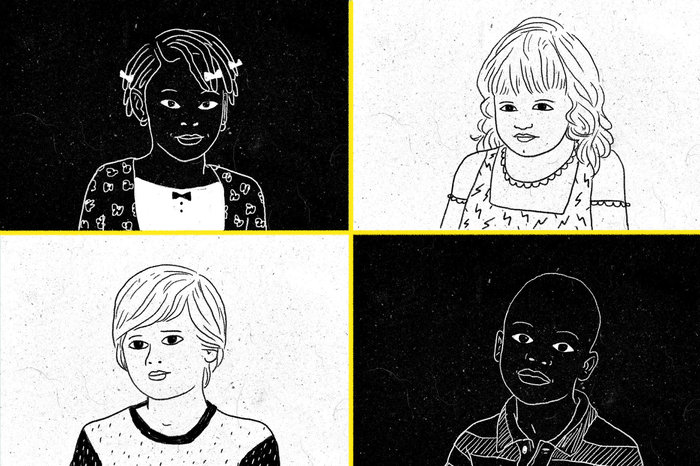
Bias Isn't Just A Police Problem, It's A Preschool Problem
"...It's impossible to separate these findings from today's broader, cultural context — of disproportionately high suspension rates for black boys and young men throughout the school years, of America's school-to-prison pipeline, and, most immediately, of the drumbeat of stories about black men being killed by police.
If implicit bias can play a role on our preschool reading rugs and in our classrooms' cozy corners, it no doubt haunts every corner of our society..."
Sunday, September 25, 2016
K-12 Teaching and Learning from the UNC School of Education
Teaching should be informed not only by the content of the discipline
but also by the lives of the students.
Culturally Relevant Teaching by Heather Coffey
Friday, September 16, 2016
Learning While Black: Creating Educational Excellence for African American Children by Janice E. Hale
Learning While Black
Creating Educational Excellence for African American Children
Janice E. Hale
with a foreword by V.P. Franklin
In Learning While Black Janice Hale argues that educators must look beyond the cliches of urban poverty and teacher training to explain the failures of public education with regard to black students. Why, Hale asks simply, are black students not being educated as well as white students?
Hale goes beyond finger pointing to search for solutions. Closing the achievement gap of African American children, she writes, does not involve better teacher training or more parental involvement. The solution lies in the classroom, in the nature of the interaction between the teacher and the child. And the key, she argues, is the instructional vision and leadership provided by principals. To meet the needs of diverse learners, the school must become the heart and soul of a broad effort, the coordinator of tutoring and support services provided by churches, service clubs, fraternal organizations, parents, and concerned citizens. Calling for the creation of the "beloved community" envisioned by Dr. Martin Luther King, Jr., Hale outlines strategies for redefining the school as the Family, and the broader community as the Village, in which each child is too precious to be left behind.
"In this book, I am calling for the school to improve traditional instructional practices and create culturally salient instruction that connects African American children to academic achievement. The instruction should be so delightful that the children love coming to school and find learning to be fun and exciting."—Janice Hale
Janice E. Hale is professor of early childhood education at Wayne State University in Detroit, Michigan. She is the founder of Visions for Children, a demonstration school designed to facilitate the intellectual development of African American preschool children. Her two previous books, Black Children: Their Roots, Culture, and Learning Styles and Unbank the Fire: Visions for the Education of African American Children, are also available from Johns Hopkins.
Creating Educational Excellence for African American Children
Janice E. Hale
with a foreword by V.P. Franklin
In Learning While Black Janice Hale argues that educators must look beyond the cliches of urban poverty and teacher training to explain the failures of public education with regard to black students. Why, Hale asks simply, are black students not being educated as well as white students?
Hale goes beyond finger pointing to search for solutions. Closing the achievement gap of African American children, she writes, does not involve better teacher training or more parental involvement. The solution lies in the classroom, in the nature of the interaction between the teacher and the child. And the key, she argues, is the instructional vision and leadership provided by principals. To meet the needs of diverse learners, the school must become the heart and soul of a broad effort, the coordinator of tutoring and support services provided by churches, service clubs, fraternal organizations, parents, and concerned citizens. Calling for the creation of the "beloved community" envisioned by Dr. Martin Luther King, Jr., Hale outlines strategies for redefining the school as the Family, and the broader community as the Village, in which each child is too precious to be left behind.
"In this book, I am calling for the school to improve traditional instructional practices and create culturally salient instruction that connects African American children to academic achievement. The instruction should be so delightful that the children love coming to school and find learning to be fun and exciting."—Janice Hale
Janice E. Hale is professor of early childhood education at Wayne State University in Detroit, Michigan. She is the founder of Visions for Children, a demonstration school designed to facilitate the intellectual development of African American preschool children. Her two previous books, Black Children: Their Roots, Culture, and Learning Styles and Unbank the Fire: Visions for the Education of African American Children, are also available from Johns Hopkins.
Monday, September 5, 2016
Black Coffee Buddhism: E. Ethelbert Miller interviews scholar Charles Johnson
Read the interview from the Fall 2016 Tricycle magazine here:
"...There is nothing new one can say about issues of race in America. What is new is how Buddhists, working daily, can take the lead in expressing the desire for true brotherhood. I asked Charles Johnson questions a person in a crowd might be thinking about. His answers illuminate the road ahead.
–E. Ethelbert Miller
Labels:
Article,
Educational Anthropology,
Interview,
Spirituality
Subscribe to:
Posts (Atom)